
Academic Research & Portfolio
Below you will find samples of my work relating to personal projects I have embarked on, academic, professional and personal and related papers.
Any sensitive data has been deidentified to protect privacy requirements and any confidential data has been scrubbed to present theoretically data only.
Complex Systems Data Science, University of Vermont
Models of Brain Activity After Injury due to
Repeated Sub-concussive Impacts
Inspiration
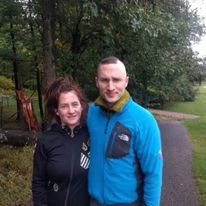
After having my beloved triplet brother succumb to a form of brain cancer in which the treatments to cure his cancer mirrored sub-concussive impacts observed in other facets if life, such as sports, where damage to the brain is continuous over time I chose to model the behavior of the brain over time using network agent based theory on a relatively simple brain connectome. I also compared this model to alternative models to see which model achieved the most realistic results.
Intro
Subconcussive impacts are less severe head impacts that do not cause a concussion.
A growing body of research suggests that repeated subconcussive impacts
can cause severe brain injury and related neurological deficits (Daneshvar et
al., 2015). This is a concern because impacts at these subconcussive levels are
common in sports and military activities (Goldstein et al., 2014).
Because of how common and dangerous repeated subconcssive impacts are,
current research is focused on understanding the mechanism of brain injury
caused by subconcussive impacts and how this injury can impair brain function.
For example, research suggests that Chronic Traumatic Encephalopathy (CTE),
a form of brain degeneration, is due to repeated subconcussive impacts, not
concussions (Daneshvar et al., 2015). While susceptibility to CTE is linked to
genetics (Abdolmohammadi et al., 2020), recent research has hypothesized that
CTE actually spreads like a viral or bacterial infection in the brain (Alyenbaawi
et al., 2020). Therefore, in severe forms of CTE, brain connections are highly
disrupted (Fig. 1; Stern et al., 2011).
In the normal brain, brain cells, known as neurons, carry out the functions of
the brain. Neurons are connected by axons that send signals to other neurons.
The majority of the brain’s neurons are excitatory, responsible for sending signals
to other neurons, while the remaining neurons are inhibitory. Inhibitory are
responsible for stopping signals by regulating the activity of excitatory neurons.
When the neurons are performing these responsibilities of sending or stopping
signals, they are referred to as “active”. Otherwise, the neurons are “resting”,
waiting to act, or “refractory”, recovering to the resting state after being active.
This is a highly simplified description of how the normal brain functions, but it
makes clear that disruptions to the balance of excitatory versus inhibitory neurons
or to the neurons themselves have the potential to impair brain function.
While many techniques exist to study brain function, electroencephalography
(EEG) is often used clinically because of it is noninvasive, affordable, convenient,
and has high temporal resolution. EEG measures the electric impulses
of neurons firing. When many cells synchronize their activity, patterns, each
of which are characterized by frequency, occur in the data (Fig. 2). Changes
in EEG have been used in the assessment of concussion (Moore et al., 2017).
For an impaired brain, we might expect decreased amplitude of the EEG signal
(Wilson et al., 2015).
In this project, our research question is whether complex modeling can be
used to explore the effect of subconcussive impacts on brain function. To answer
this question, we focused on two models: a three-dimensional (3D) cellular
automata (CA) and an agent-based network (ABN) model. To enable comparisons
between the models, the ABN was designed to resemble the CA and
vice versa. Each model accounts for neuron type (i.e., inhibitory or refractory)
and neuron state (e.g., active, resting, or refractory). We evaluate each model in
cases with and without injury and compare to EEG data to assess their validity.
The models are also compared to demonstrate the strengths and weaknesses of
each approach.
Conclusions
- As expected, the results differed between the two modeling approaches.
- The agent-based model approach produced more realistic results for all
conditions. For complex model involving many attributes on a neuron,
using the ABN model proved to be an elegant solution. - In both approaches, the 5% injury did not have substantial effect on the
simulation. The fraction of active neurons did decrease with a large increase
(10%) in the injured neurons, in general. - The models could be improved by re-evaluation of the rules for updating
neuron state as well as additional experimental or clinical brain data that
could be used to inform variables (e.g., state transition rates). This would
result in more accurate results. - These models can be used to simulate subconcussive brain injuries, with
the ABN yielding generally more realistic results.
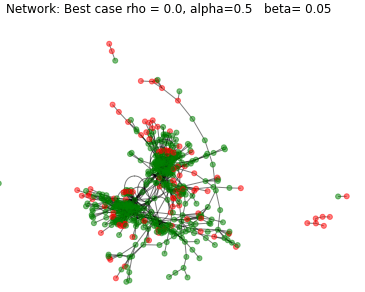
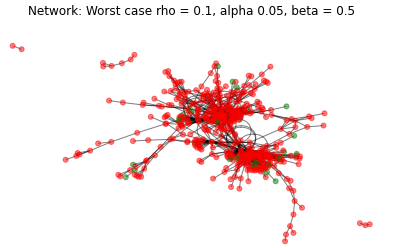
Left to right: My brother and I shown below in 2019 during his battle with an aggressive form of Brain cancer in which he beat but died from damage as a result of the cancer and treatment he sustained. Results from agent based model in best case scenario (2) and worst case scenario (3).
Happy reading below!
 SHARONE BAILEY